



Endangered Washington Orcas Face Growing Challenges as Scientists Use Drones and Dogs to Monitor Their Health
Scientists are using drones and a specially trained dog to monitor the health of Washington's 76 remaining endangered Southern Resident killer whales.
· AllSeattle
Endangered Washington Orcas Face Growing Challenges as Scientists Use Drones and Dogs to Monitor Their Health
KINGSTON, Wash. — Scientists are using innovative research techniques, including aerial drones and a specially trained detection dog, to monitor the health of Washington's endangered Southern Resident killer whales as the population continues to face serious survival challenges.
The research focuses on the 76 remaining Southern Resident orcas that inhabit the waters of the Pacific Northwest, including Washington's Salish Sea.
Researchers from the SeaDoc Society and the San Diego Zoo Wildlife Alliance are working together to collect biological samples that can help scientists better understand the animals' health, reproductive problems and overall chances of recovery.
Drones Collect Samples From Orca Breaths
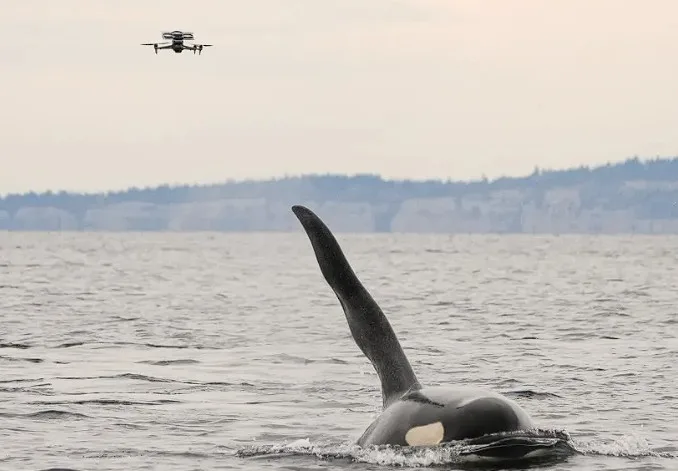
One of the most unusual parts of the research involves using drones equipped with petri dishes and microscope slides to collect droplets released when whales surface and breathe.
The drones also carry cameras and infrared sensors that allow researchers to record video and monitor the animals' body temperatures.
James Sheppard, a senior scientist and drone pilot with the San Diego Zoo Wildlife Alliance, operates the equipment from a research boat.
When an orca surfaces, the drone moves through the spray released by its blowhole, collecting biological material that can later be examined in a laboratory.
These samples provide valuable information without requiring researchers to capture or physically handle the whales.
A Specially Trained Dog Searches for Whale Samples
The research team also relies on an 11-year-old rescue dog named Eba, trained to detect orca feces.
Working from the bow of the research vessel, Eba searches the surrounding water and alerts her handlers when she detects a scent.
Researchers collect the samples for laboratory testing, although finding the material after the dog detects it can sometimes prove difficult.
Over the years, the team has gathered hundreds of breath and fecal samples.
Laboratory analysis can reveal information about hormones, bacteria, fungi, parasites and DNA. Researchers use the results to build individual health profiles for the whales.
Reproductive Problems Threaten Population Recovery
The Southern Resident killer whales continue to face serious reproductive challenges.
By examining pregnancy-related hormones in samples collected over time, researchers have discovered that many females experience miscarriages. The population also suffers from high calf mortality.
The loss of newborn whales is particularly significant for such a small population, where every successful birth can influence long-term recovery.
Researchers say monitoring individual animals over time helps them understand which whales may need additional attention and provides a clearer picture of the population's overall condition.
Declining Salmon Supplies Create Another Challenge
One of the biggest threats facing Southern Resident orcas is the declining availability of Chinook salmon, their primary food source.
Researchers point to several factors affecting salmon populations, including dams, overfishing, habitat changes, pollution and other human activities.
Boat traffic creates underwater noise that can interfere with the whales' ability to locate and catch prey.
According to researcher Deborah Giles of the SeaDoc Society, Chinook salmon that historically could weigh more than 100 pounds now average approximately 12.5 pounds.
As food becomes harder to find, Southern Resident orcas have changed their movements and increasingly search for salmon in areas farther from their traditional summer habitat around the San Juan Islands.
Southern Residents Face a Different Reality From Other Orcas
The endangered Southern Resident population shares the Salish Sea with another group of killer whales known as Bigg's orcas.
Unlike Southern Residents, Bigg's killer whales primarily hunt marine mammals, including seals, sea lions and porpoises.
Their food supply is more readily available in the region, and some Bigg's females successfully produce calves approximately every two years.
The contrast highlights how strongly the survival of Southern Resident orcas depends on access to healthy salmon populations.
Scientists Say Salmon Recovery Is Essential
Authorities have introduced measures intended to reduce disturbances to orcas, including efforts to limit vessel noise.
However, researchers emphasize that restoring salmon runs is one of the most important steps toward helping the endangered population recover.
Without sufficient food, females face greater reproductive challenges, and young whales have fewer opportunities to survive.
The ongoing research by the SeaDoc Society and San Diego Zoo Wildlife Alliance is helping scientists better understand the condition of individual whales and identify the pressures affecting their survival.
For Washington's Southern Resident orcas, protecting their future will require more than monitoring their health. It will also require improving the marine environment and restoring the food sources they depend on.
Source: Associated Press reporting by Manuel Valdes, published by FOX 13 Seattle.
Source: FOX 13 Seattle