



Seattle Highlights Survivor-Centered Efforts to Address Domestic Violence
Seattle is working to strengthen its response to domestic violence through survivor-focused policies, coordinated services and research showing promising results from a city intervention program.
· AllSeattle
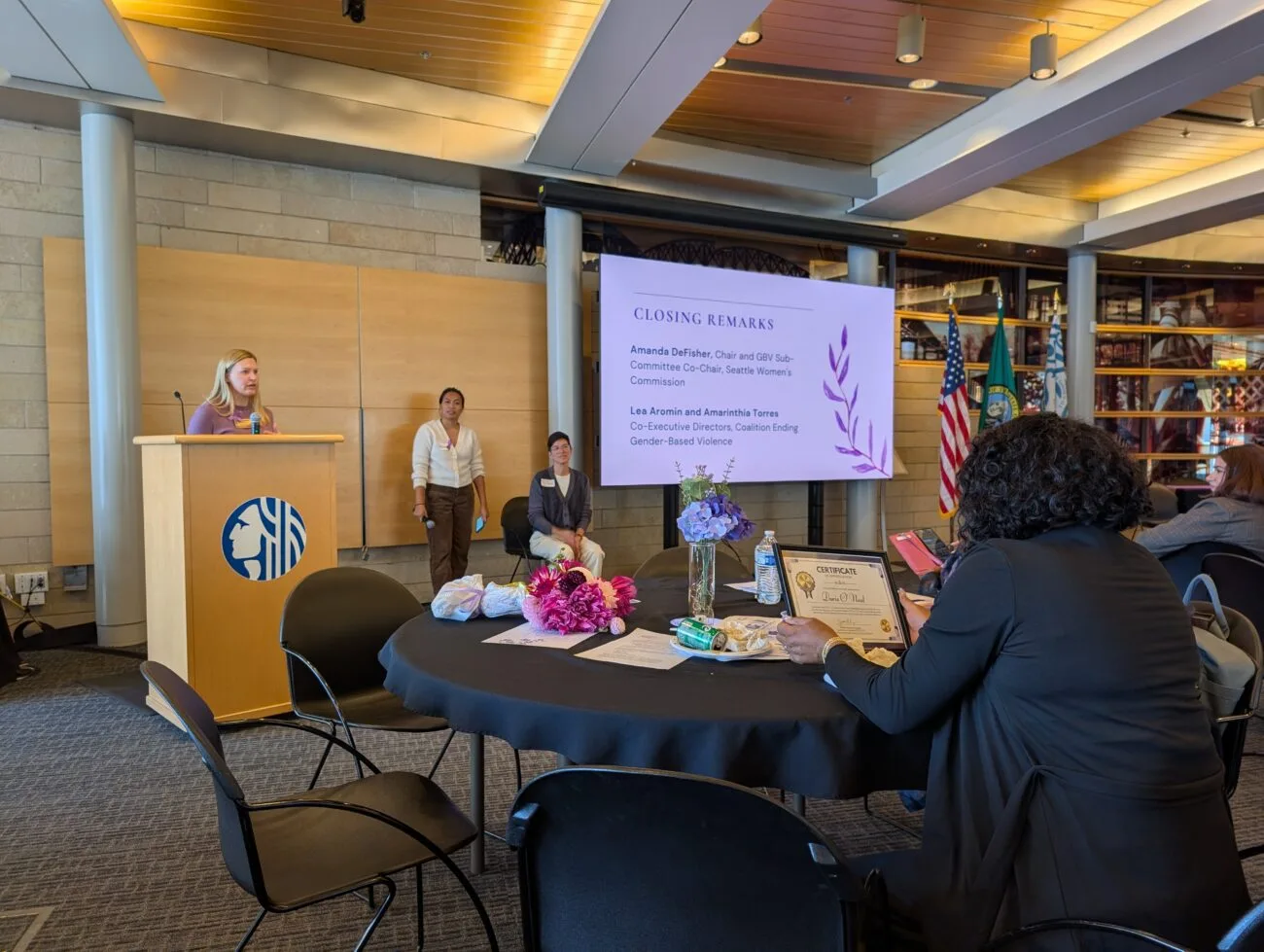
SEATTLE, Wash. — The City of Seattle is highlighting efforts to put survivors at the center of its response to domestic violence, bringing together city officials, community organizations and advocates to discuss prevention, accountability and long-term support.
The Seattle Women's Commission shared an overview of these efforts in a November 18 publication following an October 15 gathering at Seattle City Hall titled “The Time Is Now: Centering Survivors in Our Work to End Domestic Violence.”
The event was held during Domestic Violence Awareness Month and brought together representatives from city and county departments, community-based organizations and advocacy groups.
Participants discussed how public agencies can work together, use research to improve interventions and ensure that survivors' experiences inform decisions about safety and accountability.
Seattle Program Shows Promising Results
One of the event's central discussions focused on Seattle Municipal Court's Domestic Violence Intervention Project (DVIP).
The program was examined through a multidisciplinary panel that discussed how it assesses risk, monitors participants' progress, incorporates survivor perspectives and develops individualized treatment plans.
Research conducted through the court's longstanding partnership with the University of Nebraska at Omaha and the University of Washington found that participants who completed DVIP had 52% lower odds of domestic violence recidivism compared with people who received probation alone.
The evaluation also found that no participants were removed from the program because they could not afford its fees.
The findings highlight the potential value of accessible intervention programs that combine monitoring, treatment and individualized support.
Housing and Financial Security Are Part of Survivor Protection
The Seattle Women's Commission emphasized that domestic violence cannot be addressed separately from housing instability and economic insecurity.
Survivors may face financial abuse, damaged credit, housing barriers and difficulties accessing services when attempting to leave abusive situations.
The commission is working on several policy initiatives to address these challenges.
One proposal would amend Seattle's municipal code to address financial abuse in tenant screening, with the goal of reducing housing barriers caused by abuse-related debt and damaged credit.
The commission is also developing proposals to strengthen confidentiality protections for survivors who speak during public presentations before city government.
Mapping Gaps in Services Across Seattle
Another area of work involves examining where domestic violence calls are concentrated across Seattle and identifying communities where specialized services may be difficult to access.
The Women's Commission is completing a district-level assessment intended to identify gaps in shelter availability and survivor support.
The commission is also exploring the connection between domestic violence and homelessness, particularly the challenges women face when seeking stable housing and access to services.
These efforts are intended to help identify where additional coordination and resources may be needed.
Prevention Through Community Collaboration
The October gathering also emphasized that preventing domestic violence requires cooperation among government agencies, service providers and community organizations.
Seattle Women's Commission Co-Chair Amanda DeFisher said awareness alone is not enough. She called for sustained action, stronger partnerships and policies that place survivors' experiences at the center of decision-making.
The commission also stressed the importance of preventing harm before situations escalate and ensuring that responsibility for safety does not fall solely on survivors.
Continuing the Work Beyond Awareness Month
The Seattle Women's Commission thanked the Mayor's Office on Domestic Violence and Sexual Assault, the Coalition Ending Gender-Based Violence, Seattle Municipal Court, King County's Veterans, Seniors and Human Services Levy program, and other community partners for their involvement.
The initiatives described in the commission's report reflect a broader effort to connect domestic violence prevention with housing access, economic security, confidentiality and coordinated support.
City officials and community advocates say continued collaboration and survivor-informed policies are important parts of building safer communities throughout Seattle.
Source: Seattle Office for Civil Rights