



Seattle Mayor Katie Wilson Reflects on First Year, Highlights Policy Wins and Defends Controversial Decisions
Seattle Mayor Katie Wilson marked nearly a year since her election with a video address highlighting accomplishments on housing affordability, homelessness, free school meals and public transportation.
· AllSeattle
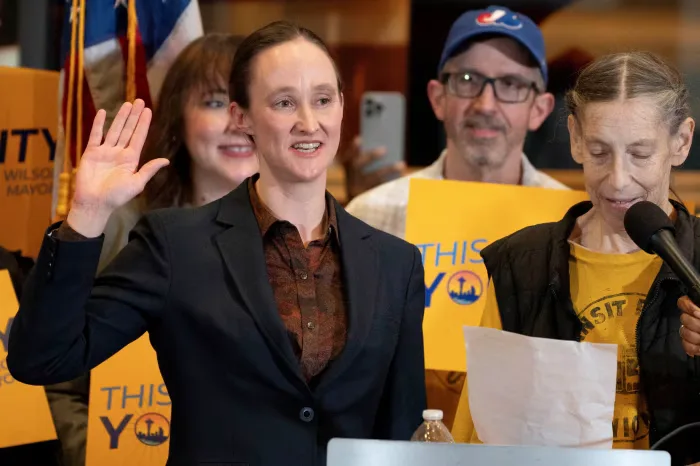
SEATTLE — Mayor Katie Wilson is reflecting on her first year as Seattle's mayor-elect and outlining the priorities and decisions that have shaped her administration since taking office in January 2026.
In a recorded message to residents released November 19, Wilson highlighted several policy initiatives adopted during her first year, while addressing criticism surrounding two particularly controversial decisions involving police surveillance cameras and people living in recreational vehicles.
Wilson described the message as the first in what she hopes will become a regular series of updates to Seattle residents.
"It's been almost exactly one year since you elected me to be your mayor," Wilson said, noting that the 2025 election was closely contested.
Wilson defeated incumbent Mayor Bruce Harrell in November 2025 and officially took office on January 2, 2026.
Housing Affordability, Free School Meals and Transit
Wilson pointed to several initiatives she said demonstrate progress on issues that were central to her campaign.
Among the policies she highlighted were:
- Rental junk fees: A ban on hidden fees charged to renters, which Wilson said contribute to the financial pressure facing people in Seattle's expensive housing market.
- Free school meals: Guaranteed free breakfast and lunch for every student in Seattle Public Schools.
- Homelessness response: Accelerated shelter expansion and adoption of practices used by other cities to address homelessness.
- Grocery pricing: A prohibition on large grocery stores using algorithms to increase food prices.
- Public transportation: Passage of a Seattle transit measure intended to improve the city's transit system.
Wilson said these initiatives are part of a broader effort to make Seattle more affordable and accessible to working families.
Mayor Defends Police Surveillance Camera Expansion
One of the most difficult decisions of her first year, Wilson said, was moving forward with the expansion of Seattle's police closed-circuit television camera network.
During her mayoral campaign, Wilson opposed the expansion, citing concerns about data security and the possibility that surveillance footage could be misused, including being accessed by federal immigration authorities.
After taking office, she paused the expansion in March and commissioned an independent review of the Seattle Police Department's Real Time Crime Center by New York University's Policing Project.
The review focused on privacy protections and civil liberties.
Wilson said the city is implementing most of the audit's recommendations to strengthen safeguards. On November 10, she announced that camera expansion would move forward into three additional neighborhoods, ending the pause.
The decision has faced opposition from the Community Not Cameras Coalition.
Wilson said she hopes the policy balances the different safety concerns raised by Seattle communities, while acknowledging that not everyone will agree with the decision.
Wilson Explains Veto of RV Permitting Plan
The mayor also defended her veto of a City Council-approved proposal that would have created a permit system for people living in recreational vehicles.
Wilson said she supported parts of the legislation, particularly efforts to expand outreach to people living in RVs as the city develops additional safe parking locations.
However, she opposed creating what she described as a complicated and costly permitting system.
Instead, Wilson issued an executive order that she said would put Seattle on a stronger path toward addressing RV homelessness.
The City Council attempted to override her veto, but the effort failed on November 12.
Wilson thanked councilmembers for sustaining the veto and said she hopes to continue working with them and community members on the issue.
Wilson Says Governing Requires Practical Decisions
Throughout her address, Wilson emphasized that governing involves evaluating the real-world effects of policies rather than relying solely on political ideology.
She said major initiatives should be judged by whether they improve people's daily lives, what risks they create and whether they represent an effective use of public resources.
Wilson also referenced the recent midterm elections, pointing to victories by progressive candidates in Seattle and other cities as part of a broader political shift.
She praised Seattle City Councilmember-elect Nilu Jenks, as well as South Seattle legislative candidates Kelabe Tewolde and Jaelynn Scott.
A Year of Decisions and Continuing Challenges
Wilson's first year has included initiatives involving housing, homelessness, transportation, food affordability and public safety, along with decisions that have generated disagreement among residents and elected officials.
Her address offered a summary of the accomplishments she considers significant while explaining why she believes several contested decisions were necessary.
The mayor said she intends to continue communicating directly with residents through regular updates about her administration's work.
Source: Seattle Mayor Katie Wilson reflects on first year in office.